
Answers About Your Pet’s Heart, Close to Home
A heart murmur found at a routine exam, a cough that won’t go away, or a pet who tires faster than before can be worrying. At St. Francis Veterinary Hospital, we give dogs and cats from San Francisco and Daly City a thorough cardiac workup. That includes heart murmur evaluations, echocardiography, cardiac biomarker testing and blood pressure checks, so you know what is happening and what to do next.
Book OnlineCardiology Services for Dogs and Cats
Heart disease is common in dogs and cats, and it often develops quietly. Many pets look healthy until the condition is advanced. Cats in particular hide heart disease well, and some show no signs until they have a sudden crisis. Finding a heart problem early gives us more ways to protect your pet’s comfort and quality of life. Our veterinary cardiology services for pet owners in San Francisco and Daly City include:
- Cardiac examinations: a careful listen to the heart and lungs, plus checks of pulse quality, gum color, breathing effort and overall body condition.
- Heart murmur evaluations: grading the murmur and finding the cause, which may be harmless or may point to valve or heart muscle disease.
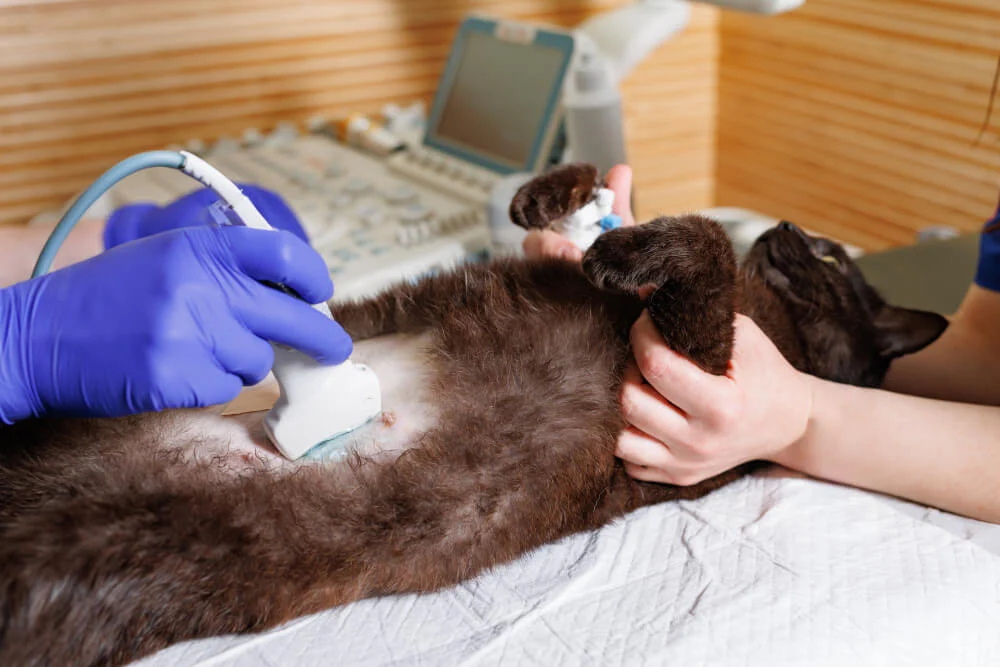
- Echocardiography: a cardiac ultrasound that shows the heart’s chambers, walls, valves and blood flow in real time.
- Cardiac biomarker testing: blood tests such as proBNP that help show whether the heart is under strain.
- Blood pressure monitoring: measuring blood pressure to diagnose and manage hypertension, which can affect the heart, kidneys, eyes and brain.
- Heart failure evaluation: assessing pets with coughing, fast breathing, fainting, exercise intolerance or a swollen belly.
- Cardiac disease medical management: building and adjusting a medication plan, then following up with rechecks.
- Pre-anesthetic cardiac screening: checking heart health before dental cleanings, surgery and other procedures that need anesthesia.
- Specialist cardiology consultation and referral coordination: getting specialist input on complex cases and coordinating referrals when your pet needs them.
Signs Your Pet May Have a Heart Problem
Call us if your dog or cat shows any of the following:
- Coughing, especially at night or after activity
- Fast or labored breathing while resting or sleeping
- Tiring easily on walks or during play
- Fainting, collapse or sudden weakness
- A swollen belly, or pale or bluish gums
- Restlessness at night or trouble getting comfortable
- In cats, sudden hind-leg weakness or pain, or open-mouth breathing
Labored breathing, collapse and sudden hind-leg paralysis are emergencies. Call (650) 994-8670 right away or see our emergency and urgent care page.

How We Diagnose Heart Disease
A cardiac workup usually starts with a physical exam and listening to the heart. From there, we choose the tests that best answer your pet’s questions. Chest radiographs show heart size and fluid in the lungs. Echocardiography shows how the heart is structured and how well it pumps. Blood work, including cardiac biomarkers, and blood pressure readings complete the picture. Pets with heart disease often have other conditions, such as kidney disease or hyperthyroidism in cats, so we look at your pet’s whole health.
Managing Heart Disease and Heart Failure
Many pets with heart disease live comfortable lives for a long time with good management. Depending on the diagnosis, your pet’s plan may include medications that support heart function, control fluid buildup or lower blood pressure, along with diet changes and guidance on exercise. We schedule rechecks to track your pet’s progress and adjust treatment as the condition changes.
We will also show you how to count your pet’s resting breathing rate at home. It is one of the simplest and most useful ways to spot early signs of heart failure between visits. Heart disease often goes hand in hand with other chronic conditions, so our internal medicine team works with you to keep every part of your pet’s care coordinated.
Heart Screening Before Anesthesia
If your pet has a murmur, an irregular heartbeat or a known heart condition, we screen the heart before any procedure that requires anesthesia. That screening may include an exam, biomarker testing, chest radiographs or an echocardiogram. The results help us choose the safest anesthesia plan and monitoring for your pet’s dental cleaning or surgery.
Pet Heart Health Questions
My veterinarian heard a heart murmur. Is that serious?
Not always. Some murmurs, especially in young puppies and kittens, are harmless and go away with time. Others are caused by valve disease or heart muscle disease. A heart murmur evaluation, which may include echocardiography and blood work, tells us the cause and whether your pet needs treatment.
What is an echocardiogram?
An echocardiogram is an ultrasound of the heart. It shows the size of the heart chambers, the thickness of the heart walls, how the valves are working and how well the heart pumps. It is painless and noninvasive, and most pets tolerate it well without anesthesia.
What are cardiac biomarkers?
Cardiac biomarkers, such as proBNP, are substances in the blood that rise when the heart is stretched or under stress. Testing them helps us screen for heart disease, especially in cats, and decide whether more imaging is needed.
Why does my pet need a blood pressure check?
High blood pressure can damage the heart, kidneys, eyes and brain, and it often causes no obvious signs early on. It is especially common in older cats and in pets with kidney or thyroid disease. Regular blood pressure monitoring helps us catch hypertension and keep it under control.
What are the signs of heart failure in dogs and cats?
Watch for coughing, fast or labored breathing while resting, tiring easily, fainting, a swollen belly and restlessness at night. In cats, open-mouth breathing or sudden hind-leg weakness needs emergency care. Call us right away if you notice any of these signs.
Can a pet with heart disease still have anesthesia?
Often, yes. We screen your pet’s heart first, then tailor the anesthesia plan and monitoring to their condition. This lets many pets with heart disease safely receive dental cleanings and other needed procedures.
Do you offer cardiology care for pets in San Francisco?
Yes. Our hospital in Daly City is a short drive from San Francisco, and we see dogs and cats from both communities for heart murmur evaluations, echocardiography, blood pressure monitoring, heart failure management and specialist referral coordination.
Protect Your Pet’s Heart Today
If your pet has a new murmur, a lingering cough or less energy than usual, a cardiac exam is the best first step. St. Francis Veterinary Hospital cares for dogs and cats from San Francisco and Daly City. Call (650) 994-8670 or request an appointment online.